Our Semicha track is a three-year program for men and women, seasoned pedagogues as well as promising educators and leaders, engaged in rabbinic studies in an open and supportive learning environment. The program requires 3 full days plus one evening of study each week.
Fellows are accepted to the program based on a set of criteria including academic achievements, Jewish textual proficiency, exemplary character and leadership potential. The curriculum is designed to provide the requisite knowledge and tools to engage in communal leadership and education. Our fellows come to us with advanced Torah knowledge and a nuanced grasp of the world. The course of studies emphasizes an attitude of intellectual honesty and openness to the world as much as the content of the subject matter itself.
What makes us unique is that we do not shy away from the thorny issues emerging from contemporary sensibilities of fairness and equality that challenge orthodoxy today. Our encounter with modernity is in a God-conscious, compassionate, inclusive, and halachically faithful way. Our vision is to develop, with our students, an authentic vision of Torah life and thought which will be compelling for Orthodox Jews and others beyond denominational boundaries today.
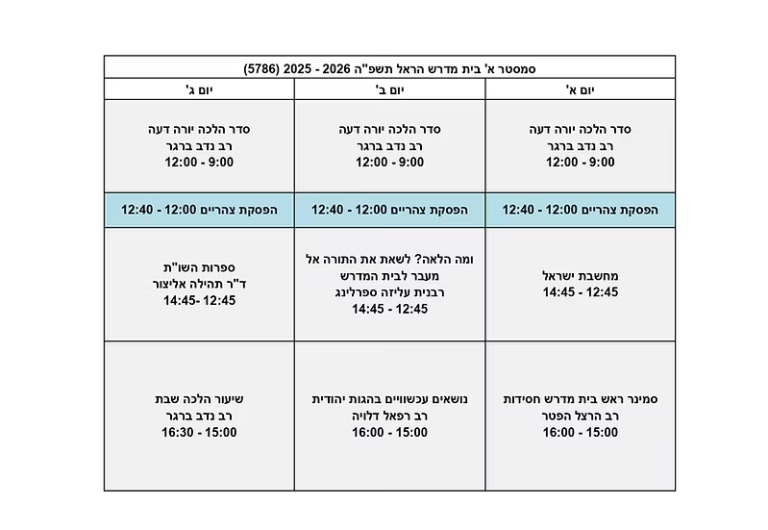
Beit Midrash Har’el is the only co-ed rabbinic program committed to Orthodoxy and halacha as well as gender equality in learning, teaching, and recognition. Our students will be the leaders of the future and are poised to impact communities both in Israel as well as the diaspora.
Beit Midrash Har’el is committed to a vision of Israel where religious leaders and values play a central role inspiring broader Israeli society – and beyond. We are not a political institution. Yet, the approach we embody provides an important alternative vision of Jewish religious thought and leadership – especially at a time when more and more individuals are distanced from religious life and community and fractures in Israeli society are in need of healing.

Jerusalem-based Rabbi, Educator, Writer & Founder of “People of the Book”
Rabbi Elhanan Miller (’19) brings the Beit Midrash Har’el ethos of rigorous Torah learning into the world in extraordinary ways. While studying for rabbinic ordination, he founded People of the Book, an initiative teaching Jewish faith, culture, and history to Muslim audiences through viral Arabic-language videos, reaching viewers across the Arab Middle East.
Elhanan is a research fellow and Hevruta faculty member at the Shalom Hartman Institute, and regularly comments on Israeli affairs. Previously, he served as Arab Affairs Reporter for The Times of Israel and as rabbi of Canberra’s Jewish community.
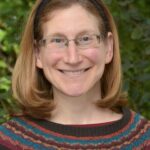
Author, Translator, and Educator
Ilana Kurshan (’25) is an American-Israeli author, translator, and educator known for her deeply thoughtful and beautifully written explorations of Jewish text, literature, and the inner life of family and faith. A graduate of Harvard University who made Aliyah to Israel, she previously worked as a translator at the Israeli Supreme Court before turning to writing full time.
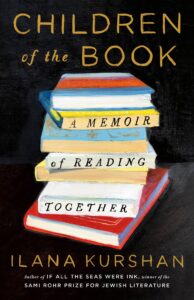
Ilana first gained international recognition with her memoir If All the Seas Were Ink, a moving account of her journey through the Babylonian Talmud alongside the upheavals of divorce and single motherhood. Her most recent memoir, Children of the Book: A Memoir of Reading Together, extends her signature blend of intellectual depth and emotional warmth into an intimate meditation on motherhood and the shared act of reading with her children. With clarity, grace, and rare insight, Ilana brings ancient texts and contemporary life into luminous conversation.
“Beit Midrash Har’el instilled in me an appreciation for the cumulative nature of the Jewish literary tradition. All Jewish texts are commentary on what came before, such that even when we move on to later texts, we never stop rereading earlier ones. The Talmud and midrash quote from and invoke the Bible; the medieval commentators invoke the Talmud, the midrash, and the Bible; the modern commentators invoke those who came before. Each new work engages, whether consciously or unconsciously, with its predecessors, and in this sense, all reading is also rereading. At Har’el I learned how to trace the development of halacha over the course of generations, witnessing how later scholars read the same sources as their predecessors and glean new insight.”


Academic
“I grew up in the Modern Orthodox world, but in a world where there was no possibility for women to be a rabbi in my community. That did not occur to me as a possibility, and I am very blessed that these opportunities started opening up with Yeshivat Maharat, and Beit Midrash Har’el, and lots of institutions that opened up when I was in college, or shortly after college, and pursuing my master’s degree. I had always thought to myself that if I were a man, I would be a rabbi. And all of a sudden, it became a possibility for me to be a rabbi, even though I am not a man.
I didn’t take the leap immediately. I felt like it is so impractical to study Torah, and it’s so hard to find a job in the field. But חשקה נפשי בתורה – my soul just desires Torah. I missed it, and I kept on coming to batei midrash in various forums. Finally, I said, ‘That’s it. I have to do what my soul desires,’ and I pursued semicha. I chose Beit Midrash Har’el because I wanted a place that had a 100% commitment to halach and to rigorous learning, and also a 100% openness to creativity and out-of-the-box thinking.”